
Key Takeaways
- Memory care safety includes thoughtful building design, secure spaces, personalized care, and consistent daily routines—not just secured entrances.
- Community layouts, lighting, clear walkways, and enclosed outdoor areas help reduce confusion and support safe independence.
- Around-the-clock support from dementia-trained professionals allows residents to receive timely, compassionate assistance whenever needed.
- Personalized care plans adapt to each resident’s needs, preferences, and daily routines, with family involvement throughout the process.
- Predictable schedules and meaningful activities promote comfort, familiarity, and emotional well-being.
A Closer Look at Memory Care Safety
Choosing memory care for someone you love often comes with difficult questions, and safety is usually at the top of the list. Families want reassurance that their loved one will be protected while still living in a welcoming, comfortable environment that respects their independence whenever possible. It’s a significant decision, and knowing your loved one is in capable hands can bring welcome peace of mind.
While secured entrances are an important part of memory care, they are only one piece of a much larger approach. Thoughtful building design, personalized care, consistent routines, and experienced dementia care professionals all contribute to an environment that supports daily life. When those elements come together, residents move through each day with greater confidence.
Safety Features in Memory Care
Safety in memory care isn’t built around a single feature. Instead, it comes from many thoughtful details working together throughout the community. From the layout of the building to personalized care plans, each element helps create an environment where residents can move through their day with comfort, confidence, and support.
Secure Community Design
Memory care communities are designed to help residents move about safely without feeling confined. Secured entrances and exits help prevent unsafe wandering while still allowing people to enjoy shared spaces throughout the community. Many locations also include enclosed outdoor courtyards where residents can spend time outside, enjoy fresh air, and take walks within a protected setting.
Easy-to-Navigate Spaces
Simple design choices can make everyday activities much less confusing for someone living with memory loss. Wide hallways, clear sightlines, and thoughtfully placed gathering spaces make it easier to move from one area to another. Contrasting colors, comfortable lighting, and reduced clutter also help residents recognize important features while lowering the risk of trips or falls.
Around-the-Clock Care Team
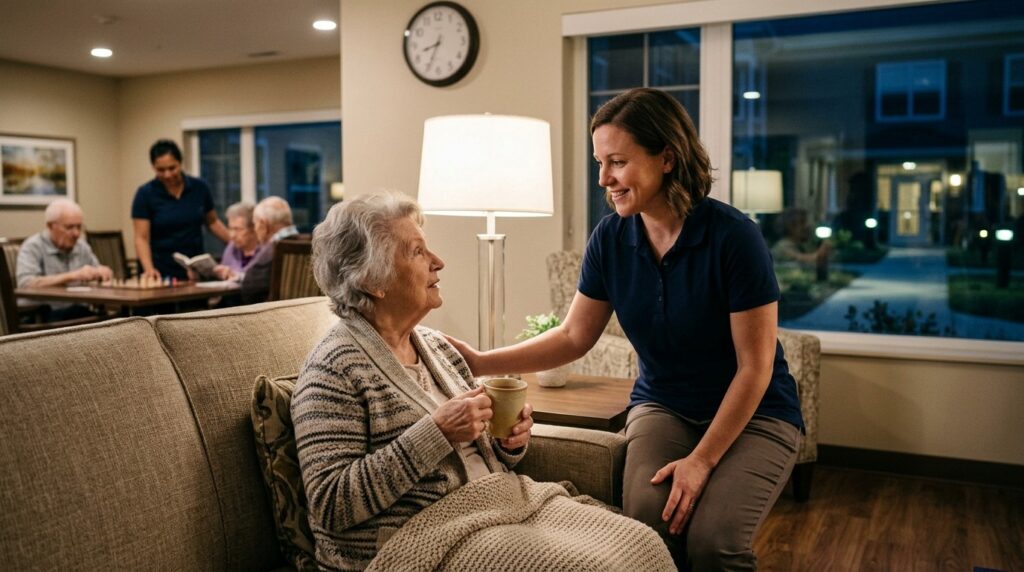
Memory loss doesn’t follow a schedule, which is why support is available day and night. Care team members receive training that helps them recognize changes in behavior, respond calmly to moments of confusion, and redirect residents with patience and compassion. Familiar faces also help build trust over time, creating reassuring daily interactions that many residents come to rely on.
Personalized Care Plans
Every person experiences dementia differently, so care should never follow a one-size-fits-all approach. Personalized care plans reflect each resident’s health needs, daily routines, personal history, and individual preferences. Families play an important role by sharing information that helps the care team provide support in ways that feel familiar and comforting.
Consistent Daily Routines
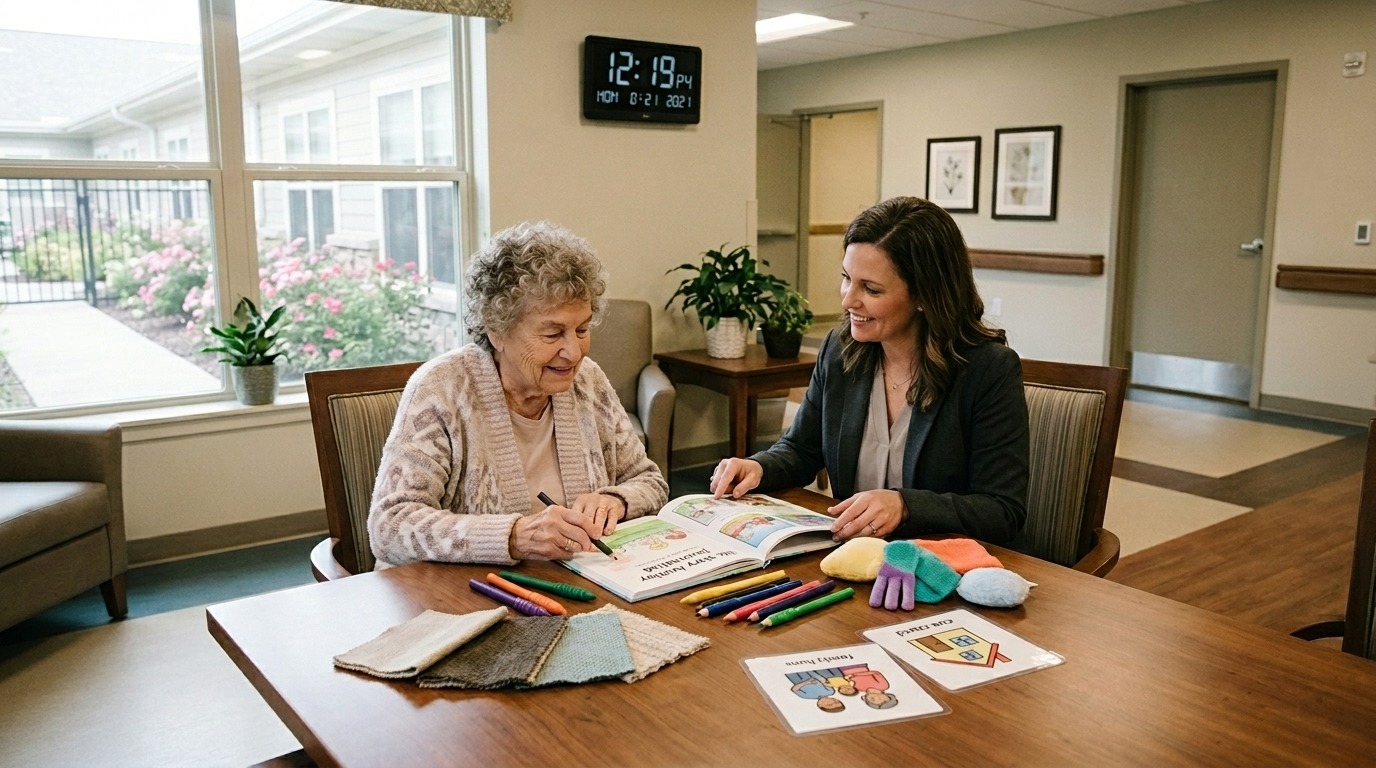
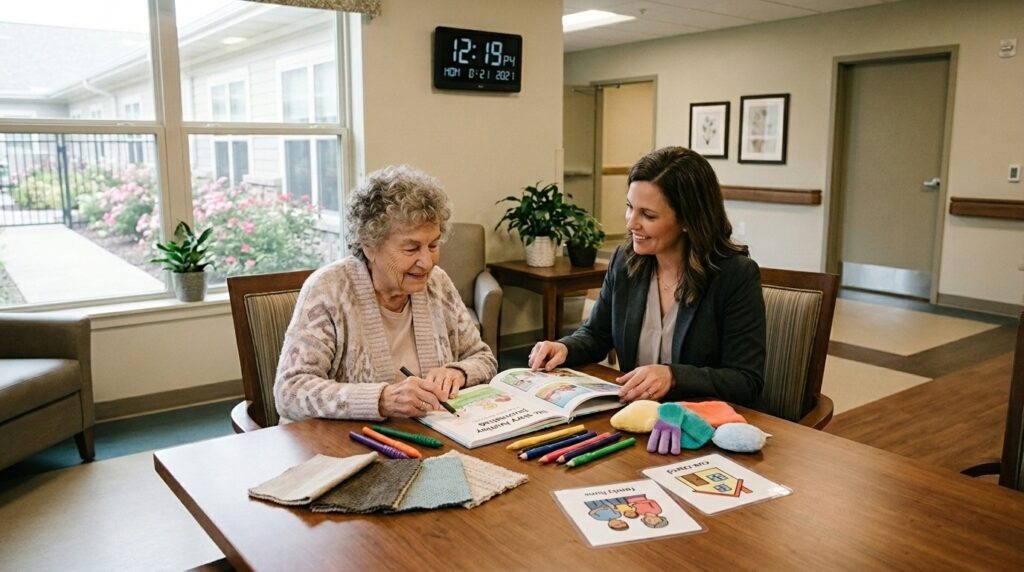
Predictable routines can make each day feel calmer and easier to navigate. Regular schedules for meals, activities, and rest help reduce uncertainty while giving residents a greater sense of stability. Activities are also selected with each person’s interests and abilities in mind, encouraging engagement without becoming overwhelming.
Emergency Response and Ongoing Monitoring
Even small changes in health or behavior can signal that someone needs additional support. Care team members observe residents throughout the day and respond quickly whenever assistance is needed. This ongoing awareness helps address concerns early while allowing the community to maintain the warm, residential atmosphere families expect.
What to Look for on a Memory Care Tour
A tour gives you the opportunity to experience much more than the building itself. It allows you to observe daily interactions, ask detailed questions, and decide whether the community feels like the right fit for your loved one. Paying attention to both the environment and the people providing care can tell you a great deal.
Observe Resident Interactions
Watch how caregivers communicate with residents during everyday moments. Conversations should feel respectful, calm, and personal rather than rushed or scripted. Small interactions often reveal how well the care team knows the people they support.
Look Beyond Secured Entrances
Physical security is important, but it should never define the atmosphere. Notice whether the community feels welcoming, comfortable, and easy to navigate. Warm gathering spaces, natural light, and thoughtfully designed common areas all contribute to a setting that feels like home.
Ask About Personalized Care
Learn how care plans are created and updated as needs change. Ask how families stay involved and how information is shared between caregivers and loved ones. Open communication helps everyone work together to provide consistent support.
Explore Daily Life
Spend time looking at the daily schedule and activity offerings. Meaningful engagement is an important part of memory care because it supports routine, social connection, and overall well-being. A varied calendar also gives residents opportunities to participate in activities that match their interests and abilities.
Take the Next Step with Arbor Oaks Senior Living
At Arbor Oaks Senior Living in Andover, MN, memory care is built around thoughtful support that respects every resident’s individual needs. Secure surroundings, personalized care, experienced dementia care professionals, and meaningful daily routines work together to create an environment where residents can feel comfortable while families gain peace of mind.
The best way to experience a memory care community is to see it for yourself. Tour the community, meet the care team, ask your questions, and explore what daily life looks like for residents. Schedule a tour with Arbor Oaks Senior Living today to learn more about memory care.